If you are contemplating a bathroom remodel, changing your bathtub—or maybe even introducing one to the room—is one of the most pleasing way...

If you are contemplating a bathroom remodel, changing your bathtub—or maybe even introducing one to the room—is one of the most pleasing ways to create a new look and transform the feel and style of the bathroom. Depending on your budget, room requirements, and décor style, you can choose various bathtubs, but one of the most favored is the freestanding tub.

As the name implies, freestanding bathtubs are designed to stand independently without any attachment to the floor or walls. They are not built into the floor like sunken tubs or set into the wall. A freestanding tub is excellent to give your bathroom a spacious, elegant, and luxurious feel.
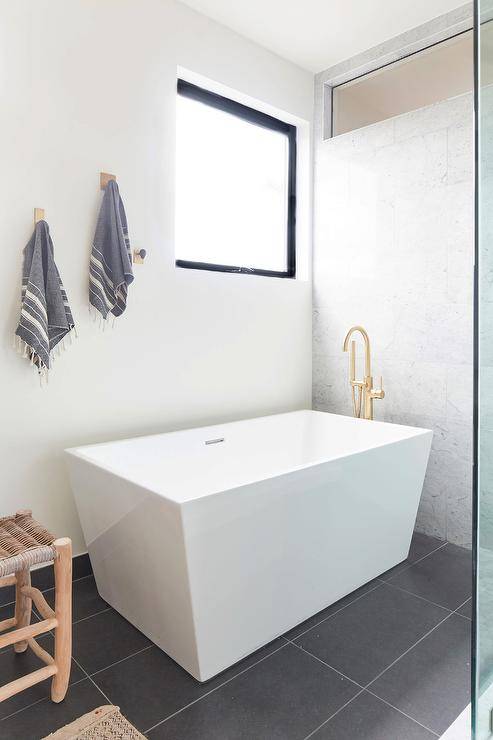
Bathroom features a modern white freestanding rectangular bathtub with polished brass gooseneck faucet tub filler on a black tiled floor.
Photo Credit: Veneer Designs – Bathroom features a modern white freestanding rectangular bathtub with polished brass gooseneck faucet tub filler on a black tiled floor.

Faucets for freestanding bathtubs can be attached to the adjacent wall or the tub itself. The tub may also come with different features depending on its price and use. Also, you can choose from various sizes depending on your conditions.

Cottage bathroom design features a modern black oval bathtub with a nickel wall mount tub filler, ivory and black mosaic tiles on the back of bathtub shelves and a white accent table. A polished nickel tub filler is mounted to a ledge beneath a window and paired with a French copper bathtub positioned on marble floor tiles. Brushed gold floor mount tub filler paired with a rectangular freestanding tub in a gray tiled bathtub nook. A corner house plant accents the nook with a cozy finish under a window boasting ample natural light. Black and white modern bathroom designed with a catty corner tub on black hexagon floor tiles and a matte black gooseneck tub filler. A brass chandelier illuminates a luxurious bathroom featuring an oval freestanding bathtub with a catty corner aged brass floor mount tub filler placed on marble and brass basketweave accent floor tiles and in front of marble and brass basketweave wall tiles. A sky blue freestanding bathtub matched with an aged brass floor mount tub filler sits on marble hexagon floor tiles beneath a window covered in white shutters and framed by Schumacher Hydrangea Drape Wallpaper. A white rope stool is positioned beside the tub. A white freestanding high-curve back tub pairs with a sleek polished nickel faucet offering a quiet place to soak, beside a window with a pink floral roman shade. A small brass sputnik chandelier brings a finishing touch of mod over the tub and white mosaic floor tiles. Bathroom features a modern white freestanding rectangular bathtub with polished brass gooseneck faucet tub filler on a black tiled floor. Welcoming bathtub features an asymmetric bathtub placed in front of a teak plank accent wall finished with a polished nickel wall mount tub filler mounted to a white backsplash. A brass tub filler is fixed to a pink and gray marble wall over a fluted freestanding bathtub placed on gray recycled floor tiles. Luxurious bathroom boasts white, gray, and black hexagon floor tiles leading to an oval freestanding bathtub matched with a nickel floor mount tub filler and lit by a brass lantern. The tub is located in front of a glass and steel walk-in shower enclosure. An oval freestanding bathtub lit by a glass bubbles chandelier sits on marble floor tiles and is paired with a polished nickel floor mount tub filler mounted in front of a gray marble lattice tiled wall. The tub is positioned beside a frameless glass shower. A chrome tub filler is mounted beneath a window and over a rectangular freestanding bathtub placed on white and gray marble hexagon floor tiles. Bathroom features an oval bathtub with a brass floor mount tub filler on gray parquet marble tiles and a round accent table. Luxurious bathroom features an arched nook accented with a black and white vintage tub placed on gray and gold marble floor tiles beneath a crystal cascading chandelier, while windows are covered in beige pleated curtains. Industrial pipe and salvaged wood shelves create a unique feature flanking a rectangular freestanding tub completed with a brass faucet under a window and vaulted ceiling displaying a black hanging drum pendant. A step up feature adds to an appealing surface for the freestanding tub with a beige runner in front of the step. Brushed gold wall mount tub filler designed with an oval freestanding tub illuminated with a brass hanging light in a transitional bathroom design. A window over the tub adds lovely natural light to an already bright and airy bathroom design. Green tiled bathroom walls complement a white oval freestanding bathtub paired with a matte black tub filler. A white beaded chandelier illuminates a freestanding bathtub with an oil rubbed bronze floor mount tub filler and marble grid floor tiles. A rectangular freestanding bathtub with a polished nickel floor mount tub filler sits beneath a window on and between gray his and hers washstands. Master bathroom features a freestanding bathtub with nickel tub filler in front of a marble window seat flanked by French washstands topped with marble, lit by an Amber French chandelier hung from a tray ceiling and a gold accent table.

Freestanding Bathtub Size and Design Ideas

Freestanding bathtubs come in various designs. Pedestal bathtubs come with a slightly raised design to create a unique look. Freestanding soaker tubs (meant for relaxing) are great additions for those that love to kick back and soak. They are deep and feature a slightly sloped design. Get a freestanding soaking tub if you want something to soak in for hours. If you enjoy baths as a couple, get an extra wide and deep bathtub for ultimate comfort.
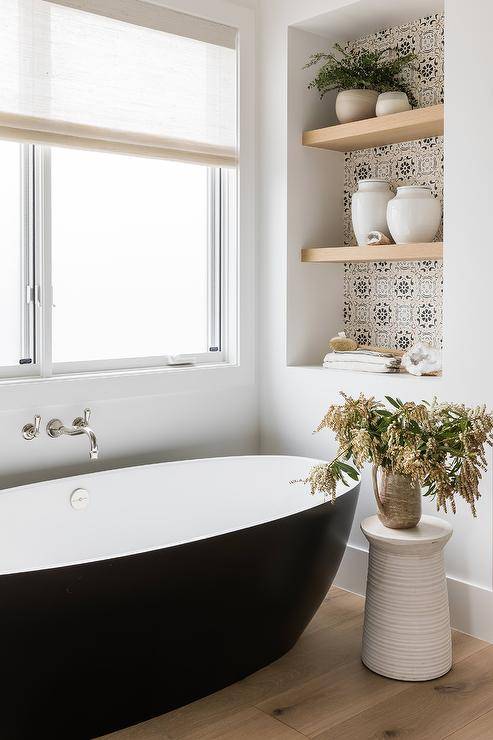
Cottage bathroom design features a modern black oval bathtub with a nickel wall mount tub filler, ivory and black mosaic tiles on the back of bathtub shelves and a white accent table.
Photo Credit: Pure Salt Interiors – Cottage bathroom design features a modern black oval bathtub with a nickel wall mount tub filler, ivory and black mosaic tiles on the back of bathtub shelves and a white accent table.

The most important thing is to research considerably. Determine what your needs are, what budget you can work with, and the best source of freestanding tubs. In terms of size, make sure you measure the floor area and entry doors before buying.
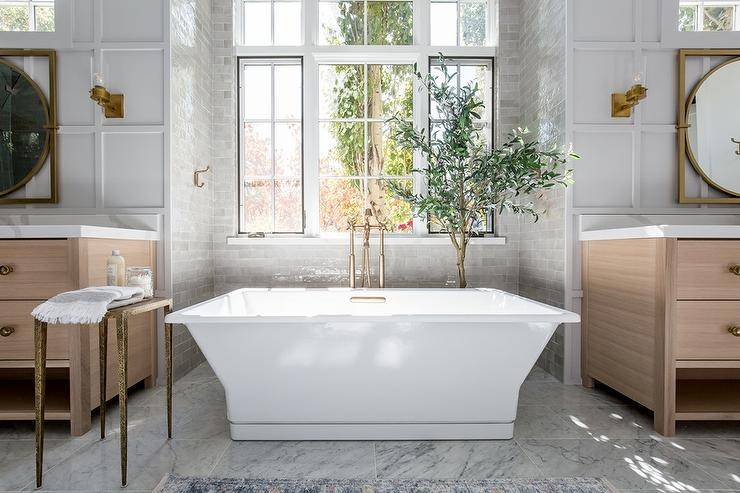
Brushed gold floor mount tub filler paired with a rectangular freestanding tub in a gray tiled bathtub nook. A corner house plant accents the nook with a cozy finish under a window boasting ample natural light.
Photo Credit: UC Custom Homes – Brushed gold floor mount tub filler paired with a rectangular freestanding tub in a gray tiled bathtub nook. A corner house plant accents the nook with a cozy finish under a window boasting ample natural light.

Related: Before You Buy: The Pros & Cons of a Freestanding Bathtub

Difference Between a Freestanding And A Built-In

Freestanding bathtubs have long been seen as the most incredible romantic statement; the large claw-foot tubs of yesteryear can accommodate two people simultaneously. However, there have been some objections: they are more difficult to clean around, and they do not keep the bathwater hot for very long. The alternative though—built-in bathtubs—has a negative reputation for being old-fashioned and less luxurious.
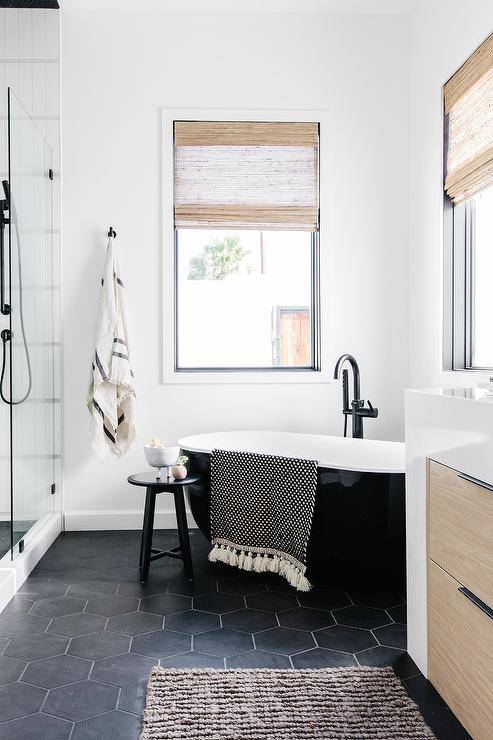
Black and white modern bathroom designed with a catty corner tub on black hexagon floor tiles and a matte black gooseneck tub filler.
Photo Credit: The Lifestyled Co – Black and white modern bathroom designed with a catty corner tub on black hexagon floor tiles and a matte black gooseneck tub filler.
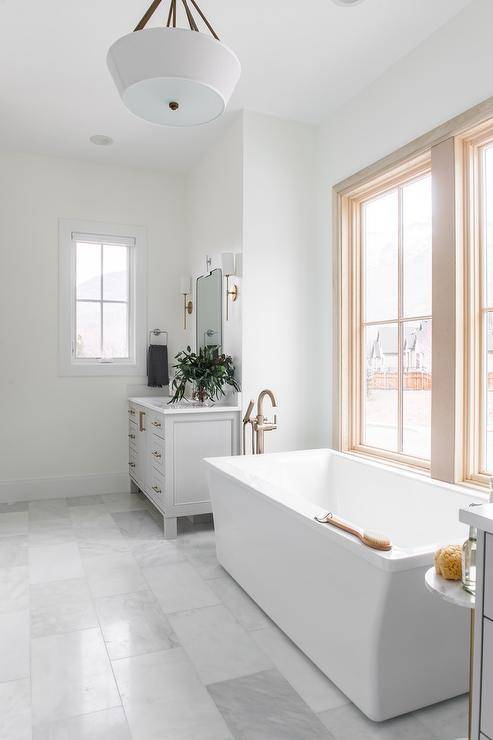
A rectangular freestanding bathtub with a polished nickel floor mount tub filler sits beneath a window on and between gray his and hers washstands.
Photo Credit: Cambridge Home Company -A rectangular freestanding bathtub with a polished nickel floor mount tub filler sits beneath a window on and between gray his and hers washstands.

What is the distinction between a freestanding and a built-in bath? When it comes to bathtubs, there are two basic types to consider: built-in baths, which are generally installed in an alcove with walls on three sides, and freestanding baths, which give you more flexibility in where you place it in the room.
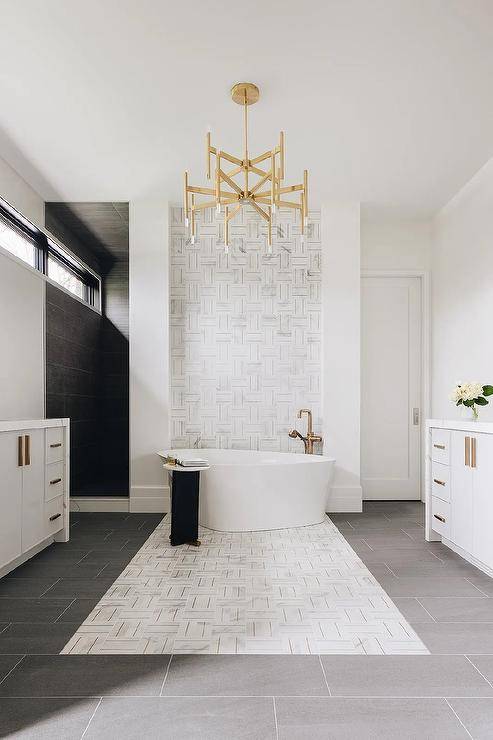
A brass chandelier illuminates a luxurious bathroom featuring an oval freestanding bathtub with a catty corner aged brass floor mount tub filler placed on marble and brass basketweave accent floor tiles and in front of marble and brass basketweave wall tiles.
Photo Credit: Amy Storm & Co – A brass chandelier illuminates a luxurious bathroom featuring an oval freestanding bathtub with a catty corner aged brass floor mount tub filler placed on marble and brass basketweave accent floor tiles and in front of marble and brass basketweave wall tiles.

The claw-foot tub is a well-known freestanding option that stands on four feet, unlike some modern freestanding bathtubs that sit flush on the ground or a pedestal. Both freestanding and built-in tubs are available in a variety of dimensions—length, breadth, and depth—and if you enjoy taking baths, you’ll want a tub that fits your body, so test-drive tubs in the showroom by jumping in and lying down (or at least try to!)
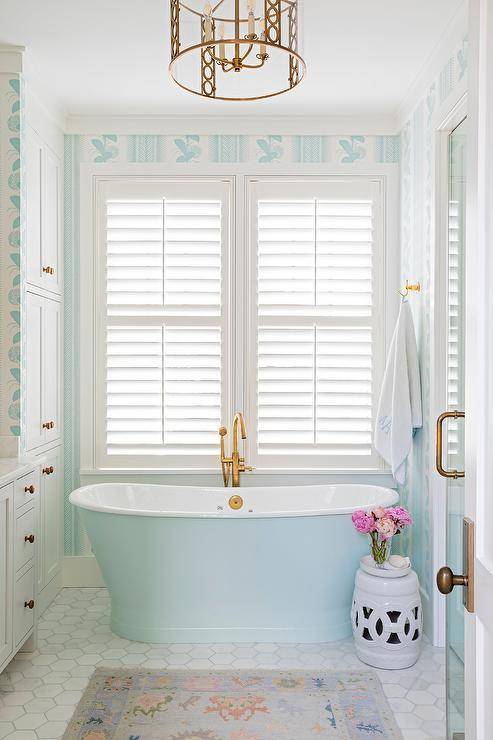
A sky blue freestanding bathtub matched with an aged brass floor mount tub filler sits on marble hexagon floor tiles beneath a window covered in white shutters and framed by Schumacher Hydrangea Drape Wallpaper. A white rope stool is positioned beside the tub.
Photo Credit: Kara Miller Interiors – A sky blue freestanding bathtub matched with an aged brass floor mount tub filler sits on marble hexagon floor tiles beneath a window covered in white shutters and framed by Schumacher Hydrangea Drape Wallpaper. A white rope stool is positioned beside the tub.

What is the point of having a freestanding bath? There is no situation where a freestanding tub is “needed”; most individuals select freestanding baths to make a statement or achieve a vintage aesthetic. If it’s the style you’re looking for, freestanding models have a more excellent range of options.
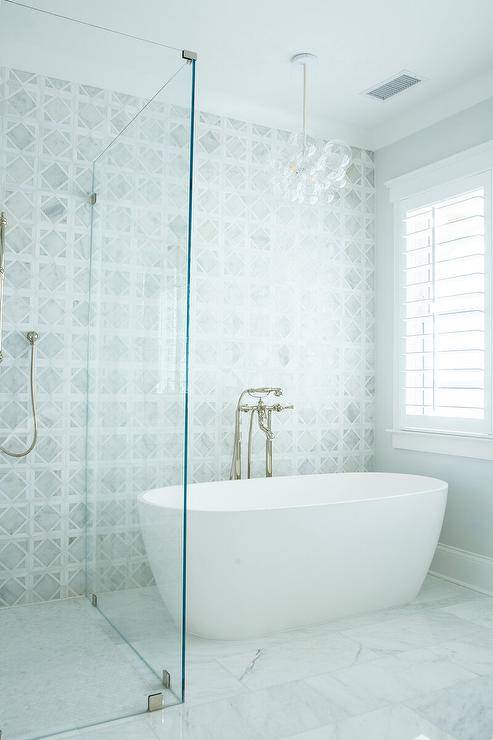
An oval freestanding bathtub lit by a glass bubbles chandelier sits on marble floor tiles and is paired with a polished nickel floor mount tub filler mounted in front of a gray marble lattice tiled wall. The tub is positioned beside a frameless glass shower.
Photo Credit: Kathryn Lily Interiors – An oval freestanding bathtub lit by a glass bubbles chandelier sits on marble floor tiles and is paired with a polished nickel floor mount tub filler mounted in front of a gray marble lattice tiled wall. The tub is positioned beside a frameless glass shower.
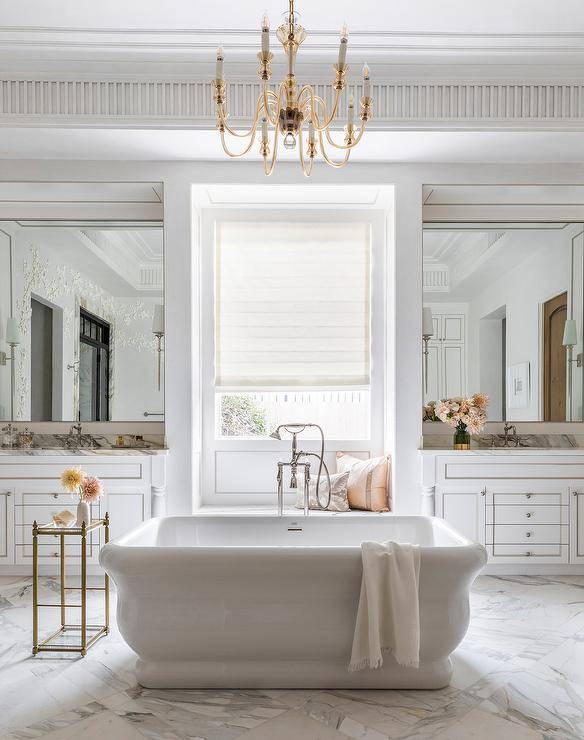
Master bathroom features a freestanding bathtub with nickel tub filler in front of a marble window seat flanked by French washstands topped with marble, lit by an Amber French chandelier hung from a tray ceiling and a gold accent table.
Photo Credit: Marie Flanigan – Main bathroom features a freestanding bathtub with nickel tub filler in front of a marble window seat flanked by French washstands topped with marble, lit by an Amber French chandelier hung from a tray ceiling and a gold accent table.

However, there is more discretion regarding where the tub is placed—as long as piping is nearby. Consider positioning your tub near a window if you want a view while you soak.
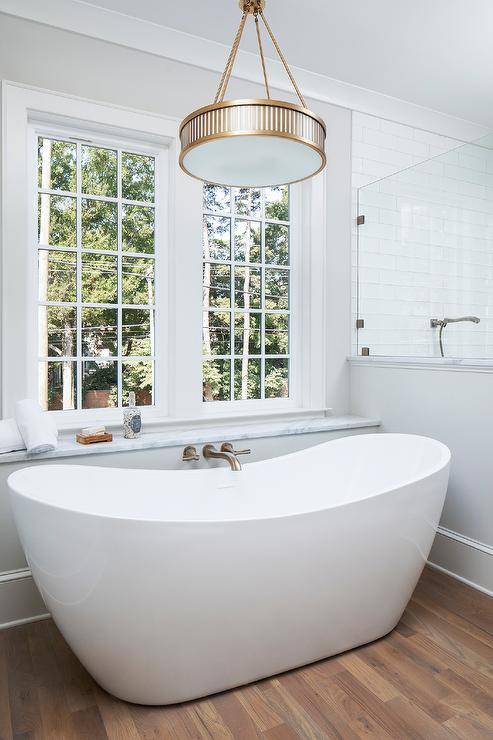
Brushed gold wall mount tub filler designed with an oval freestanding tub illuminated with a brass hanging light in a transitional bathroom design. A window over the tub adds lovely natural light to an already bright and airy bathroom design.
Photo Credit: Pike Properties – Brushed gold wall mount tub filler designed with an oval freestanding tub illuminated with a brass hanging light in a transitional bathroom design. A window over the tub adds lovely natural light to an already bright, airy bathroom design.
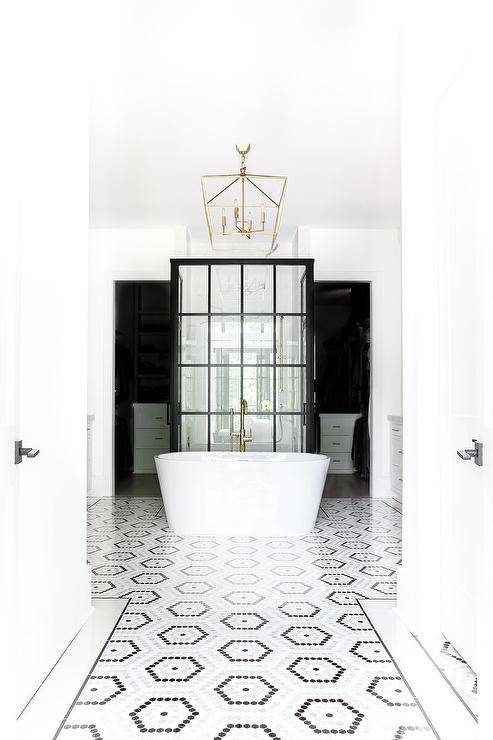
Luxurious bathroom boasts white, gray, and black hexagon floor tiles leading to an oval freestanding bathtub matched with a nickel floor mount tub filler and lit by a brass lantern. The tub is located in front of a glass and steel walk-in shower enclosure.
Photo Credit: Kathryn Lily Interiors – Luxurious bathroom boasts white, gray, and black hexagon floor tiles leading to an oval freestanding bathtub matched with a nickel floor mount tub filler and lit by a brass lantern. The tub is in front of a glass and steel walk-in shower enclosure.

Freestanding Bathtub Design Ideas: What Materials To Choose

Materials used to construct freestanding bathtubs are typically similar to those used in other tubs. Centuries ago, they used materials like stone and clay to fashion bathtubs. In modern times, fiberglass and acrylic are the most generally used materials. Here is a breakdown of the different materials used and their remarkable features.
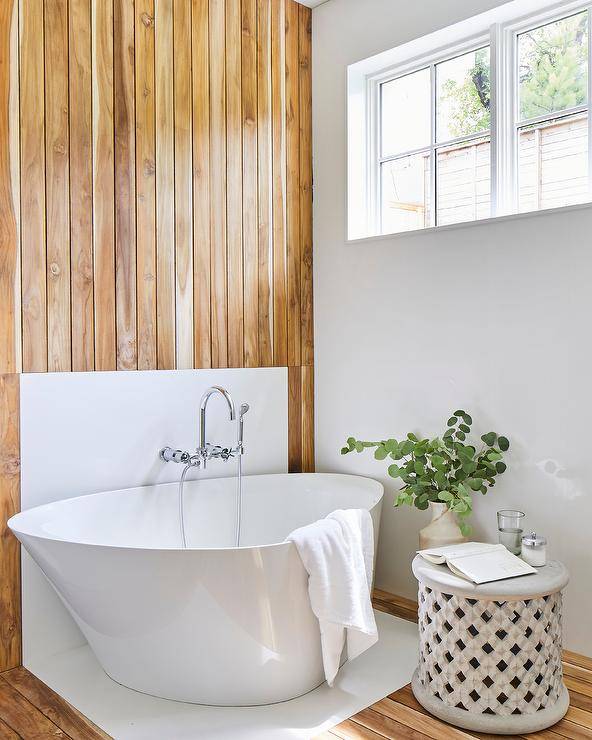
Welcoming bathtub features an asymmetric bathtub placed in front of a teak plank accent wall finished with a polished nickel wall mount tub filler mounted to a white backsplash.
Photo Credit: Mel Bean Interiors – Welcoming bathtub features an asymmetric bathtub placed in front of a teak plank accent wall finished with a polished nickel wall mount tub filler mounted to a white backsplash.

Fiberglass 

Fiberglass tubs are favored because of their affordability. The material is more budget-friendly than other options such as copper, cast iron, or brass. It is also lightweight and can be restored when damaged instead of replacing the entire tub. The biggest negative is poor durability and an easy-to-scratch surface.
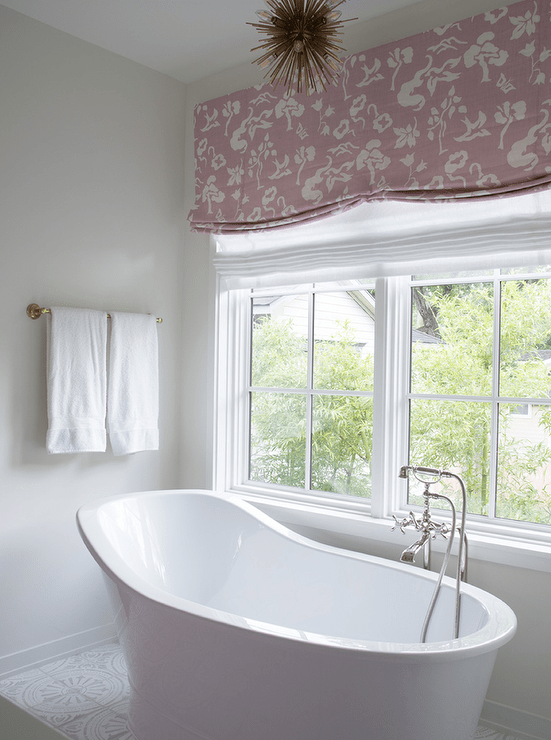
A white freestanding high-curve back tub pairs with a sleek polished nickel faucet offering a quiet place to soak, beside a window with a pink floral roman shade. A small brass sputnik chandelier brings a finishing touch of mod over the tub and white mosaic floor tiles.
Photo Credit: Meg Lonergan – A white freestanding high-curve back tub pairs with a sleek polished nickel faucet offering a quiet place to soak, beside a window with a pink floral roman shade. A small brass sputnik chandelier brings a finishing touch of mod over the tub and white mosaic floor tiles.

Acrylic

This is another inexpensive and lightweight tub option. Acrylic tubs have fiberglass as a significant component. Like fiberglass, it can scratch easily and does not last very long.
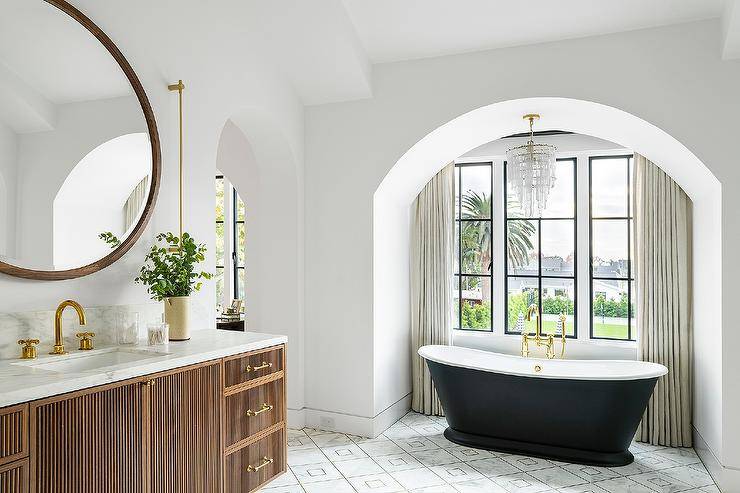
Luxurious bathroom features an arched nook accented with a black and white vintage tub placed on gray and gold marble floor tiles beneath a crystal cascading chandelier, while windows are covered in beige pleated curtains.
Photo Credit: Brandon Architects – Luxurious bathroom features an arched nook accented with a black and white vintage tub placed on gray and gold marble floor tiles beneath a crystal cascading chandelier, while windows are covered in beige pleated curtains.

Ceramic Tile

This is another suitable option if you are seeking a budget-friendly freestanding tub. One significant advantage of ceramic tile tubs is that they can be made onsite. This means you can get a highly customized design with whatever size you desire. On the downside, ceramic tile tubs require much maintenance and can be undesirable on your bare skin.

Cast Iron

Cast iron tubs could potentially last forever. The molded iron is completed on the outside with enamel. The tub is hard and study, with the exterior incredibly resistant to scratches or any kind of damage. On the negative, cast iron tubs are challenging to move because of their weight and can also come at a hefty cost.

Porcelain on Steel

This tub consists of a sheet of steel combined with a layer of porcelain enamel. It is a low-cost but durable material. It is also easy to clean.

Natural Stone

Natural stone freestanding tubs are, as you would anticipate, quite costly. They are made from various materials such as marble, sandstone, basalt, or granite. Natural stone bathtubs are excellent if you are going for a luxurious spa look in your bathroom.
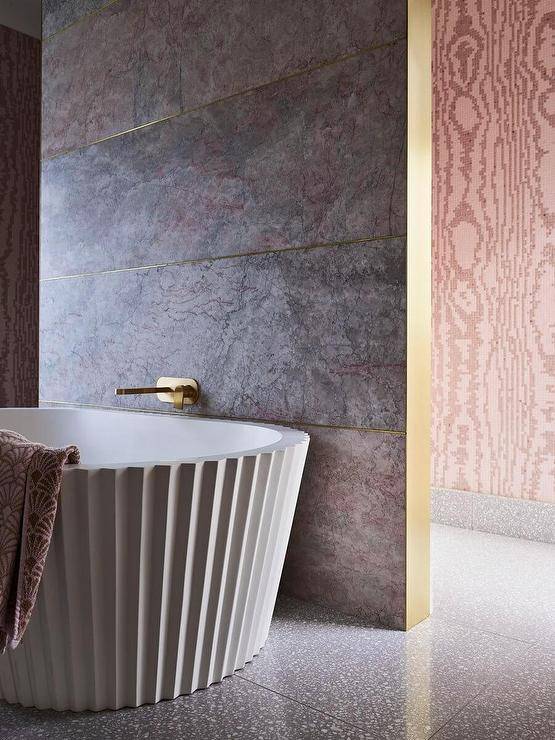
A brass tub filler is fixed to a pink and gray marble wall over a fluted freestanding bathtub placed on gray recycled floor tiles.
Photo Credit: Greg Natale – A brass tub filler is fixed to a pink and gray marble wall over a fluted freestanding bathtub placed on gray recycled floor tiles.

Copper

Copper carries a warm aesthetic while also adding a luxurious feel to the décor. The most significant benefit of copper bathtubs lies in their health benefits. Copper is naturally antimicrobial, helping keep your tub hygienic. Copper tubs come in a variety of finishes. Though more expensive than fiberglass or acrylic tubs, they last very long while needing minimal maintenance.
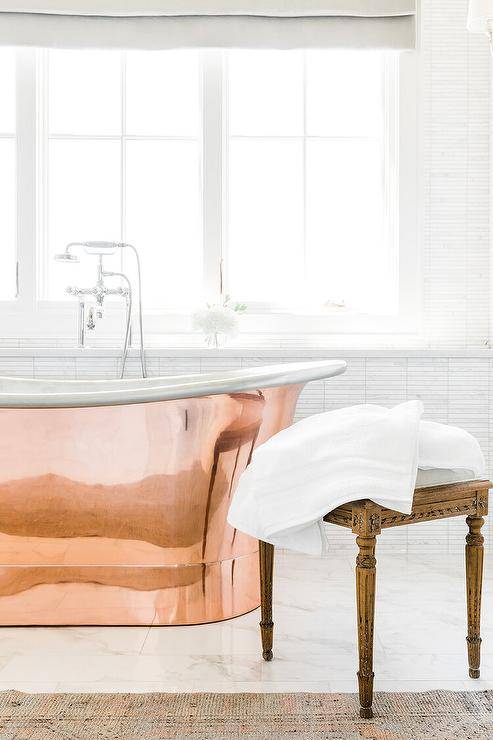
A polished nickel tub filler is mounted to a ledge beneath a window and paired with a French copper bathtub positioned on marble floor tiles.
Photo Credit: W Design Collective – A polished nickel tub filler is mounted to a ledge beneath a window and paired with a French copper bathtub positioned on marble floor tiles.

Related: 16 Copper Bathtubs That Completely Reinvent The Space

Brass

Brass is not typically the first material someone thinks of when considering freestanding bathtub design ideas, perhaps due to its high cost. The material combines zinc and copper to form an extremely durable metal. Since it does not rust or corrode, a brass tub will last for decades while maintaining its outstanding style. Like copper tubs, brass tubs are costly but provide value for your money.

Wood

Wood!? I know what you’re thinking, and yes, you can get a bathtub made from wood. If you are going for an ultra-luxurious warm décor, this is an excellent choice. Of course, the wood has to be treated to ensure that it is entirely waterproof.

Choosing among all these materials can be a little bit hard. The most crucial factor to consider is your budget. For low to mid-range budgets, good options include acrylic, ceramic, porcelain, and fiberglass. For bigger budgets, consider materials like wood, brass, copper, or cast iron.
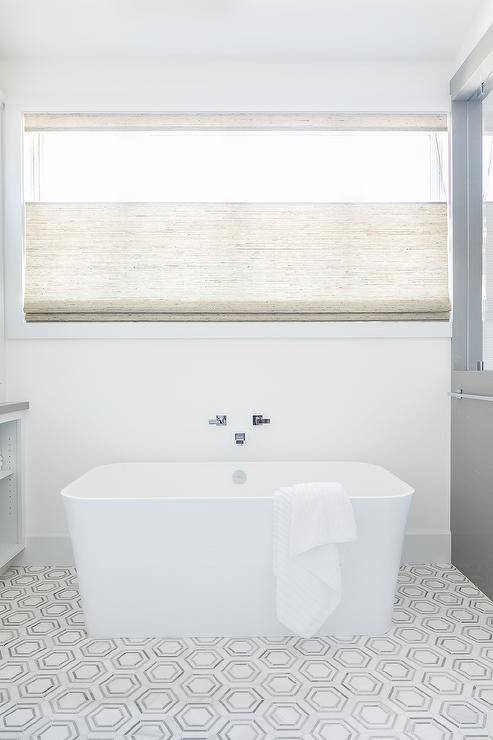
A chrome tub filler is mounted beneath a window and over a rectangular freestanding bathtub placed on white and gray marble hexagon floor tiles.
Photo Credit: Brandon Architechts – A chrome tub filler is mounted beneath a window and over a rectangular freestanding bathtub placed on white and gray marble hexagon floor tiles.
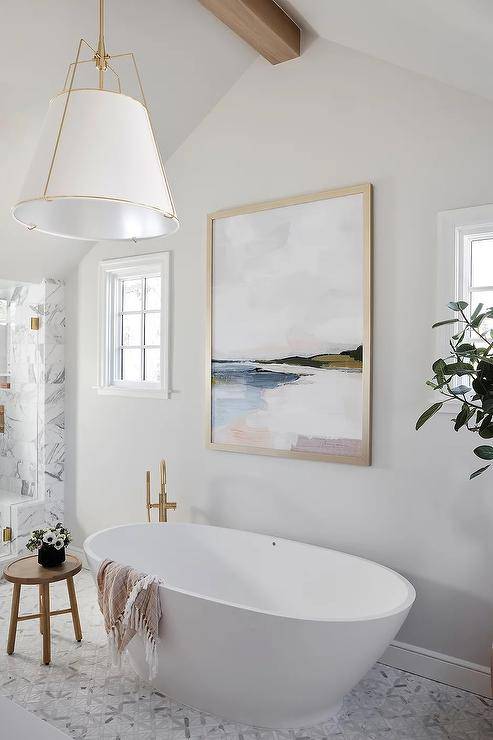
Bathroom features an oval bathtub with a brass floor mount tub filler on gray parquet marble tiles and a round accent table.
Photo Credit: Emily Kates Design – Bathroom features an oval bathtub with a brass floor mount tub filler on gray parquet marble tiles and a round accent table.

Also, consider your décor requirements. Wood and copper tubs tend to create a warm homely feel. Cast iron and natural stone can be used for a spa décor or an industrial-style bathroom. If you are going for simple urban contemporary, we recommend fiberglass, acrylic, ceramic, or porcelain.
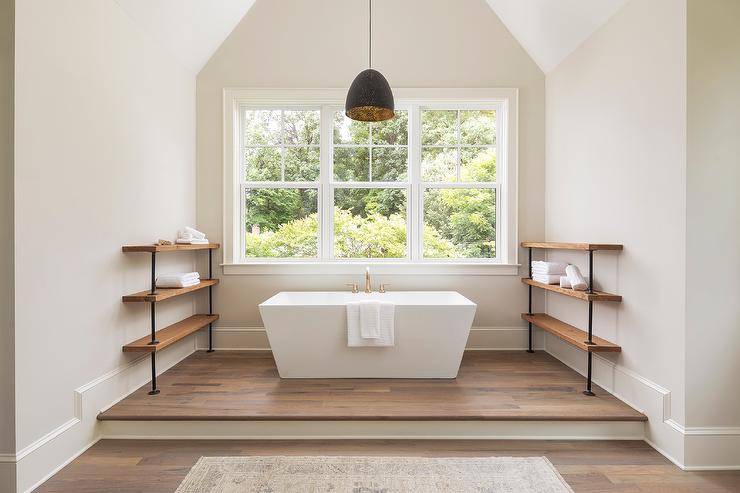
Industrial pipe and salvaged wood shelves create a unique feature flanking a rectangular freestanding tub completed with a brass faucet under a window and vaulted ceiling displaying a black hanging drum pendant. A step up feature adds to an appealing surface for the freestanding tub with a beige runner in front of the step.
Photo Credit: Pike Properties – Industrial pipe and salvaged wood shelves create a unique feature flanking a rectangular freestanding tub completed with a brass faucet under a window and vaulted ceiling displaying a black hanging drum pendant. A step up feature adds to an appealing surface for the freestanding tub with a beige runner in front of the step.
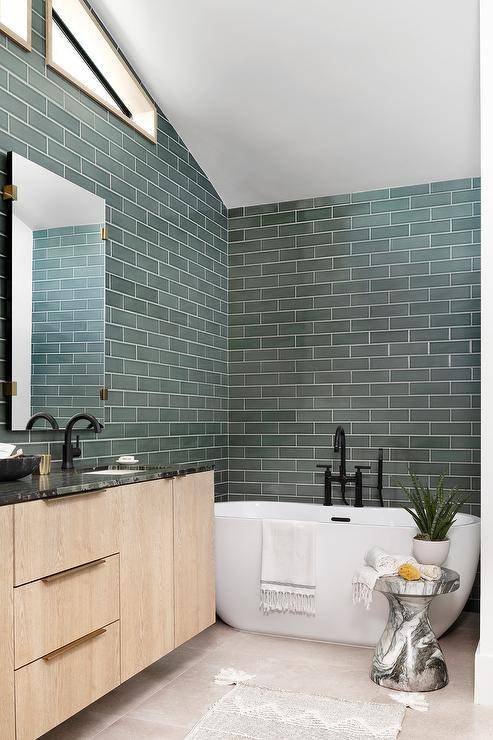
Green tiled bathroom walls complement a white oval freestanding bathtub paired with a matte black tub filler.
Photo Credit: HW Interiors – Green tiled bathroom walls complement a white oval freestanding bathtub paired with a matte black tub filler.
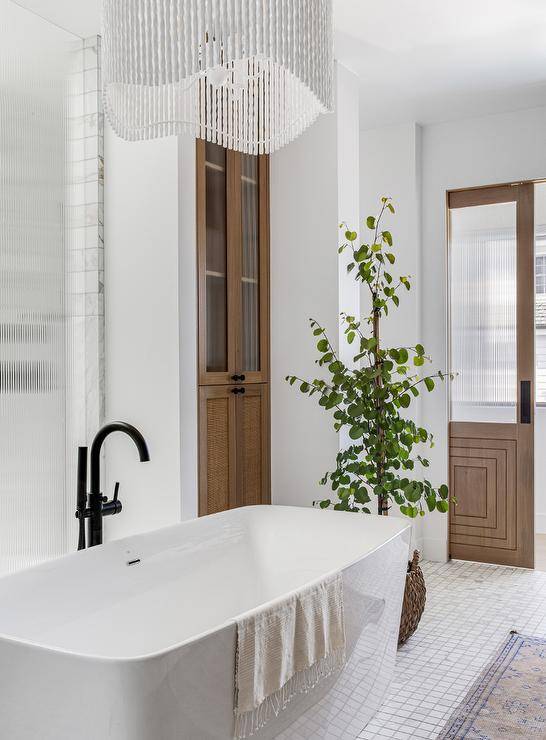
A white beaded chandelier illuminates a freestanding bathtub with an oil rubbed bronze floor mount tub filler and marble grid floor tiles.
Photo Credit: Lindye Galloway – A white beaded chandelier illuminates a freestanding bathtub with an oil rubbed bronze floor mount tub filler and marble grid floor tiles.

Frequently Asked Questions (FAQs)

Functional yet attractive decorative objects to place near your freestanding tub include pillar candles, cylinder vases, wall art or ornamental mirrors, towel baskets, lounge chairs, and decorative planters.
It is not necessary to tile around a freestanding tub. However, if the freestanding tub is against a wall, you’ll need to protect the wall from water damage. To do that, tile is one of the options, but you could also use anything that you would use for a kitchen backsplash.
A freestanding bath should have no less than 6 inches of space surrounding all angles of the tub. Following that guideline, you can ensure your freestanding bath has a comfortable access point and won’t appear cramped in your bathroom, regardless of its design.
Many interior design experts remark that freestanding tubs are not only as popular as they’ve ever been but are growing in popularity among homeowners.

Here are some more great articles you may enjoy:

You're reading Freestanding Bathtub Design Ideas That Will Work In Any Bathroom [14+ Photos], originally posted on Decoist. If you enjoyed this post, be sure to follow Decoist on Twitter, Facebook and Pinterest.


from decoist https://ift.tt/TtAMSux

Burgundy has been a favored color choice for fashion, lip colors, and weddings but more than that, for interior design. Burgundy is a warm a...

Burgundy has been a favored color choice for fashion, lip colors, and weddings but more than that, for interior design. Burgundy is a warm and alluring shade that looks fantastic on everything from living room walls to elegant furnishings.

Numerous colors go with burgundy, as it is a delightfully adaptable shade. It looks good with neutrals and calm colors. It also looks pleasing when incorporated into colorful patterns. Whether you’re on the quest for excellent furnishings or are interested in what color assortments you can use in your home, there are tons of pairings to decide from that go with burgundy.

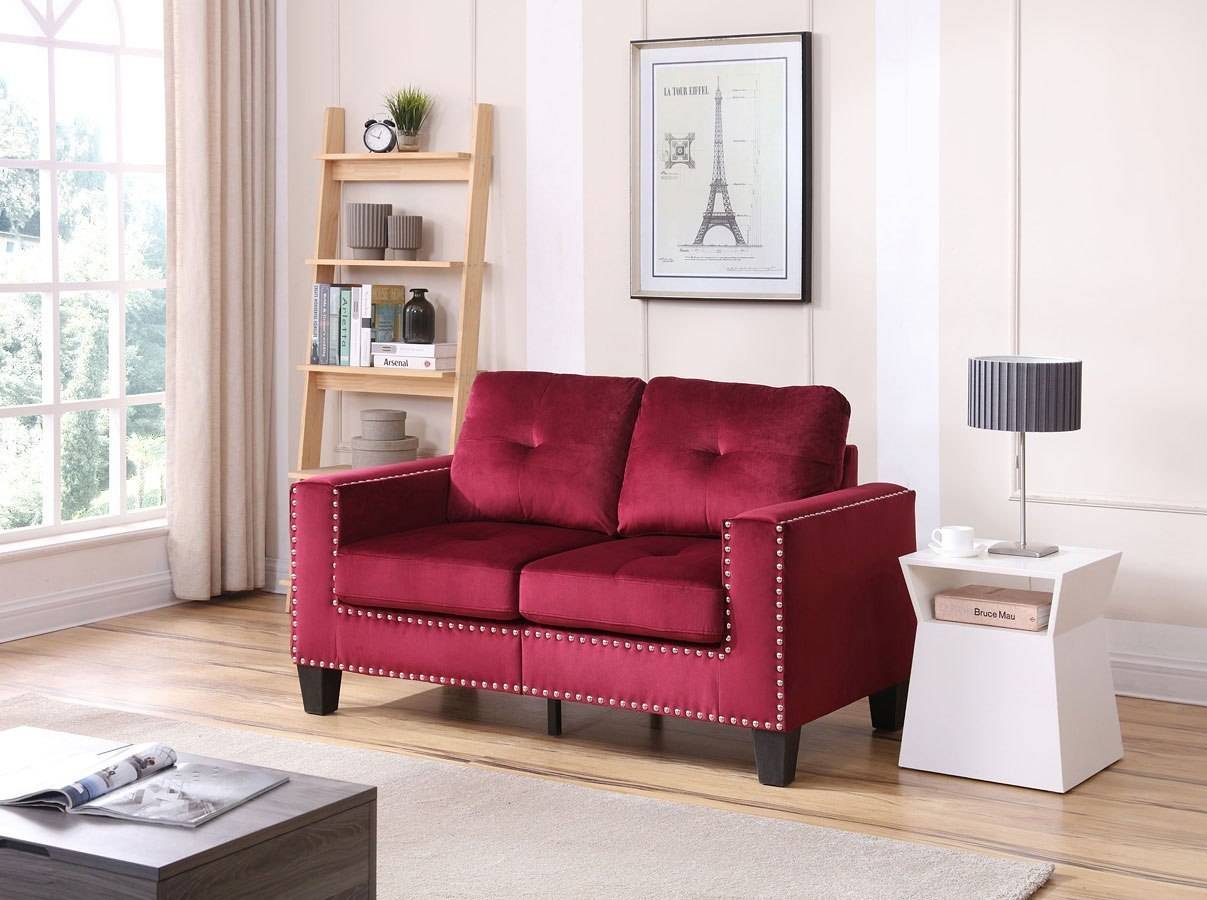
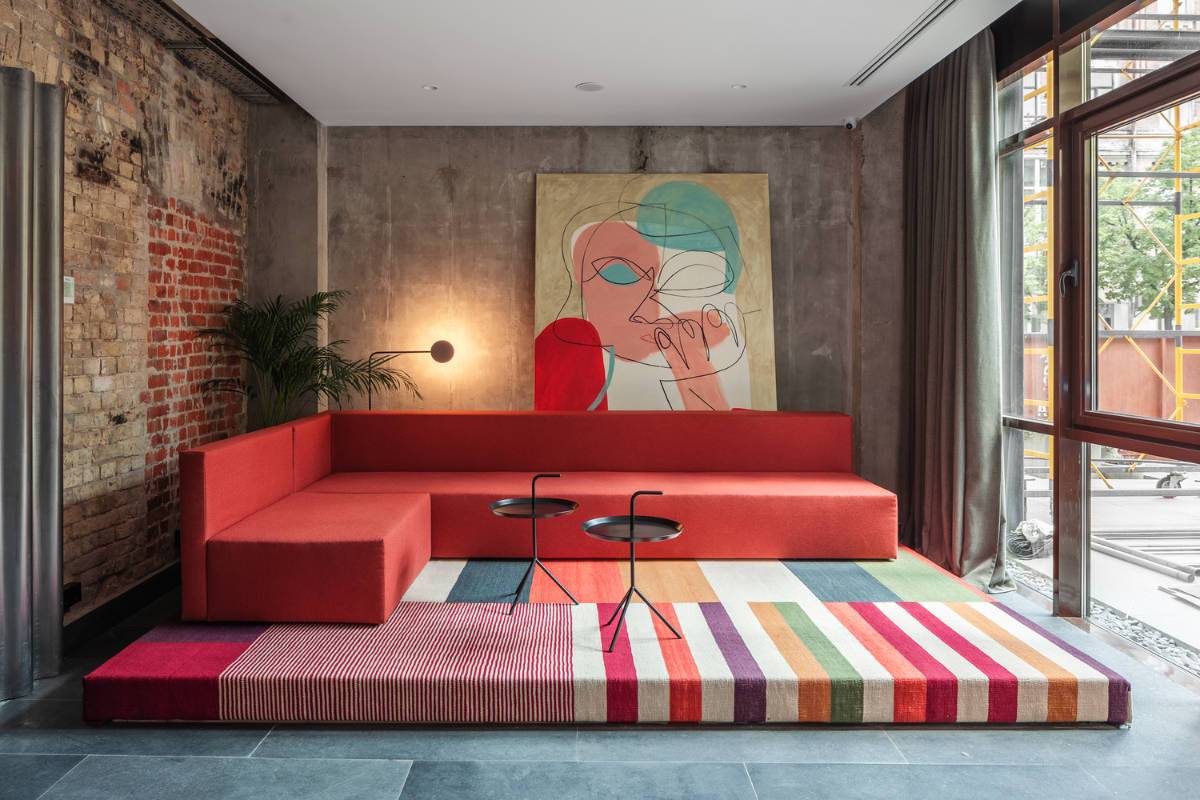
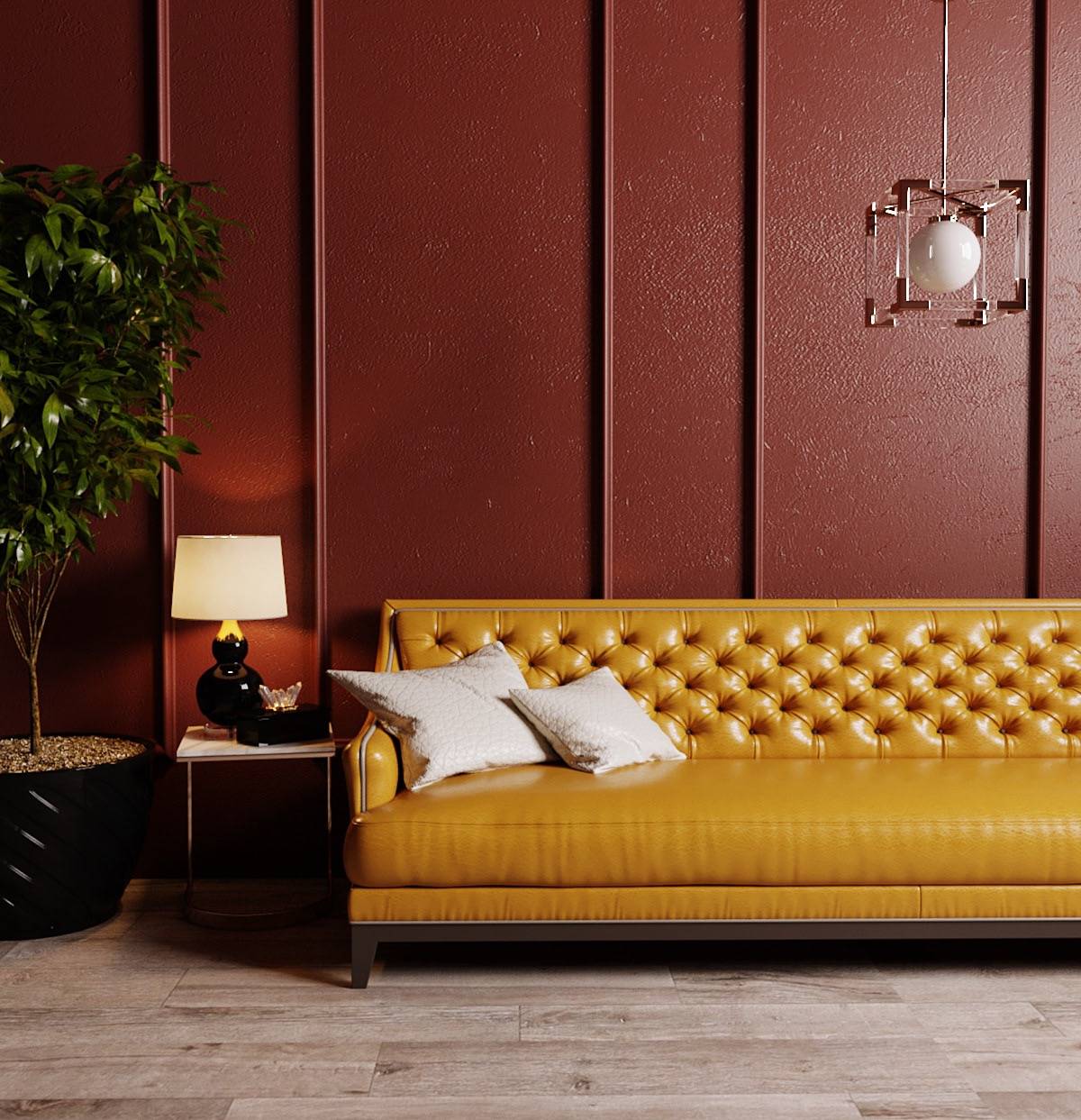
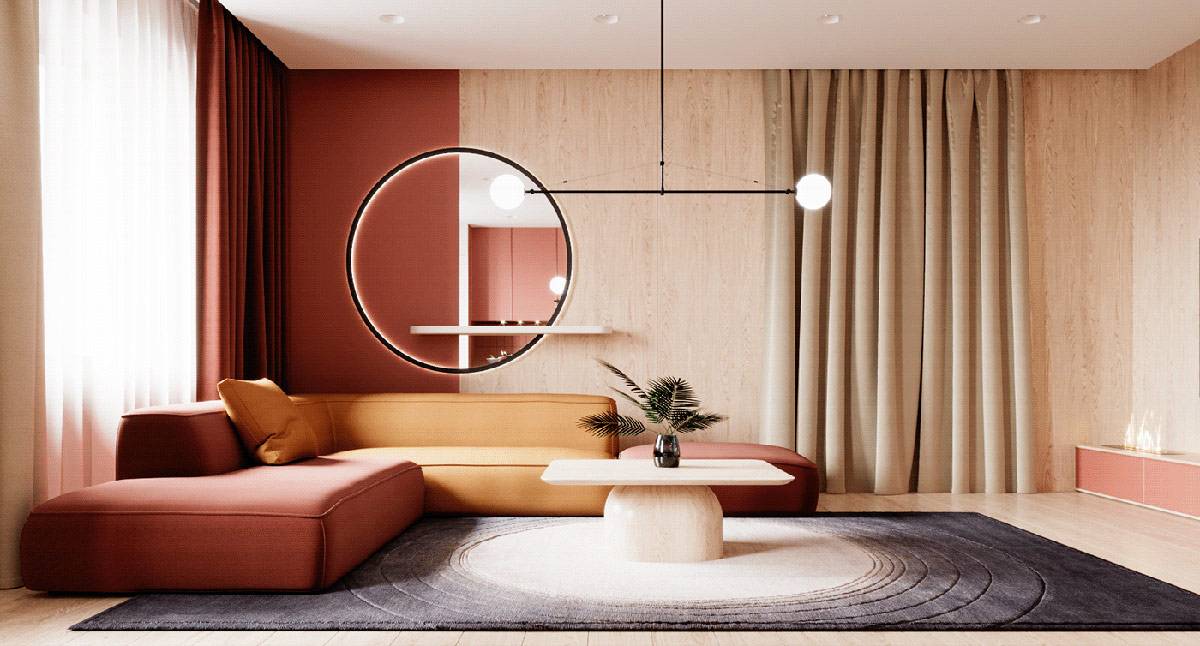
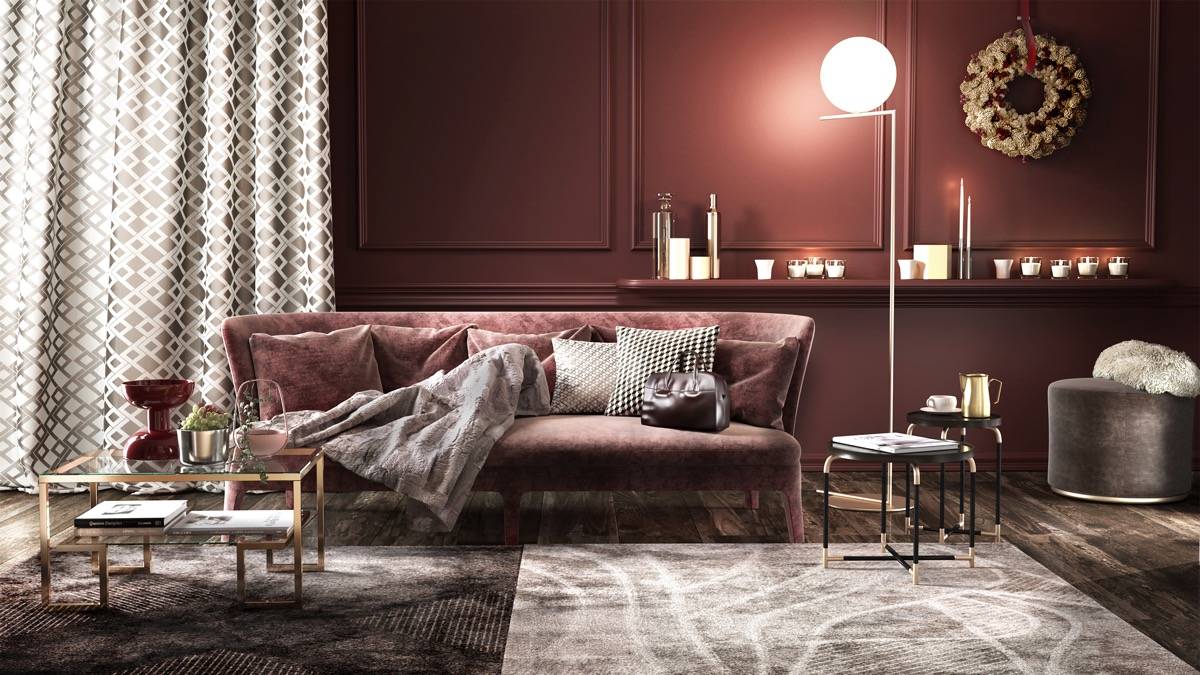
burgundy sectional couch with gold frame mirrors and gold legs coffee table green couch in front of burgundy wall with wall art table and greenery burgundy wall with mustard yellow leather couch burgundy and blush living rooim with velvet couch dark and moody large modern living room with black and burgundy furniture low fireplace burgundy and teal with pops of color living room with modern sectional couch and large wall art exposed brick burgundy soad with cream walls and leaning ladder shelf burgundy and navy living room with white fireplace burgundy and black couches with area rug in the middle stone granite fireplace burgundy walls in charcoal grey living room sectional couch large modern living room with modern couch and light fixture burgundy and mustard yellow large expensive living room with white sectional couch large wall art burgundy arm chairs burgundy and green dining room with black chairs and open shelving room with burgundy velvet couch gold frames and round coffee table with glass bead chandelier Burugndy-26246-217x155 Burgundy red mudroom cabinets accented with aged brass hardware are topped with a black marble countertop and fixed beside burgundy red open lockers fitted with brass hooks mounted over a light stained wood bench. A french burlap runner covers gray feather style floor tiles. burgundy and navy designed modern living room with gold chair and sectional couch modern wall art

What Is Burgundy?

Burgundy is a dark reddish-brown color with undertones of cool purple. It is often mistaken for maroon, a slightly brighter, brick-colored red that lacks the purple undertones.

Burgundy gained its name because it resembled the richly colored red wines exported from Burgundy, France. Similar wine-like colors like Merlot or Berry resemble burgundy and are also typically mixed up with one another. The color represents sophistication, power, and ambition.

It is also considered a sign of wealth. Although it is a shade of red, burgundy generally doesn’t have the adverse connotations associated with the traditional red. It is a more enjoyable and energetic color than an aggressive one. 

Burgundy can look sleek and modern, wildly bold, eclectic, or just plain cozy, depending on the chosen color pairing.

When pairing burgundy with other colors, keep in mind the following:  

  • Work with complementary, analogous, or triadic color schemes for the best results;
  • Burgundy can be both a base or an accent color, depending on your preference ;
  • Burgundy shades will look different in varying lights.

Complementary Colors For Burgundy

The colors opposite burgundy on the color wheel are yellow and green. This creates a high-contrast, striking look when these colors are used together.

Try using pale yellows and greens for a more subtle take on this color combination. This will create a softer look that is perfect for any room in your home.

Psychology of Burgundy

Burgundy, as a deep hue of the color red, signifies strength and power. It is seen as more severe than lighter shades of red, lacking fun. However, it has the same energy as a more classic red, which can provoke excitement and passion. This powerful energy, combined with the psychological seriousness of the color, gives it a sense of high ambition.

Unlike red, burgundy rarely creates negative emotions. It is more reserved and introverted, and as a warm color, encourages feelings of comfort.

Burgundy and Navy

Burgundy and navy is a classic color combination that oozes class and refinement. Both colors are warm and rich, with an abundance of contrast for visual interest in a room painted in a light, neutral color.

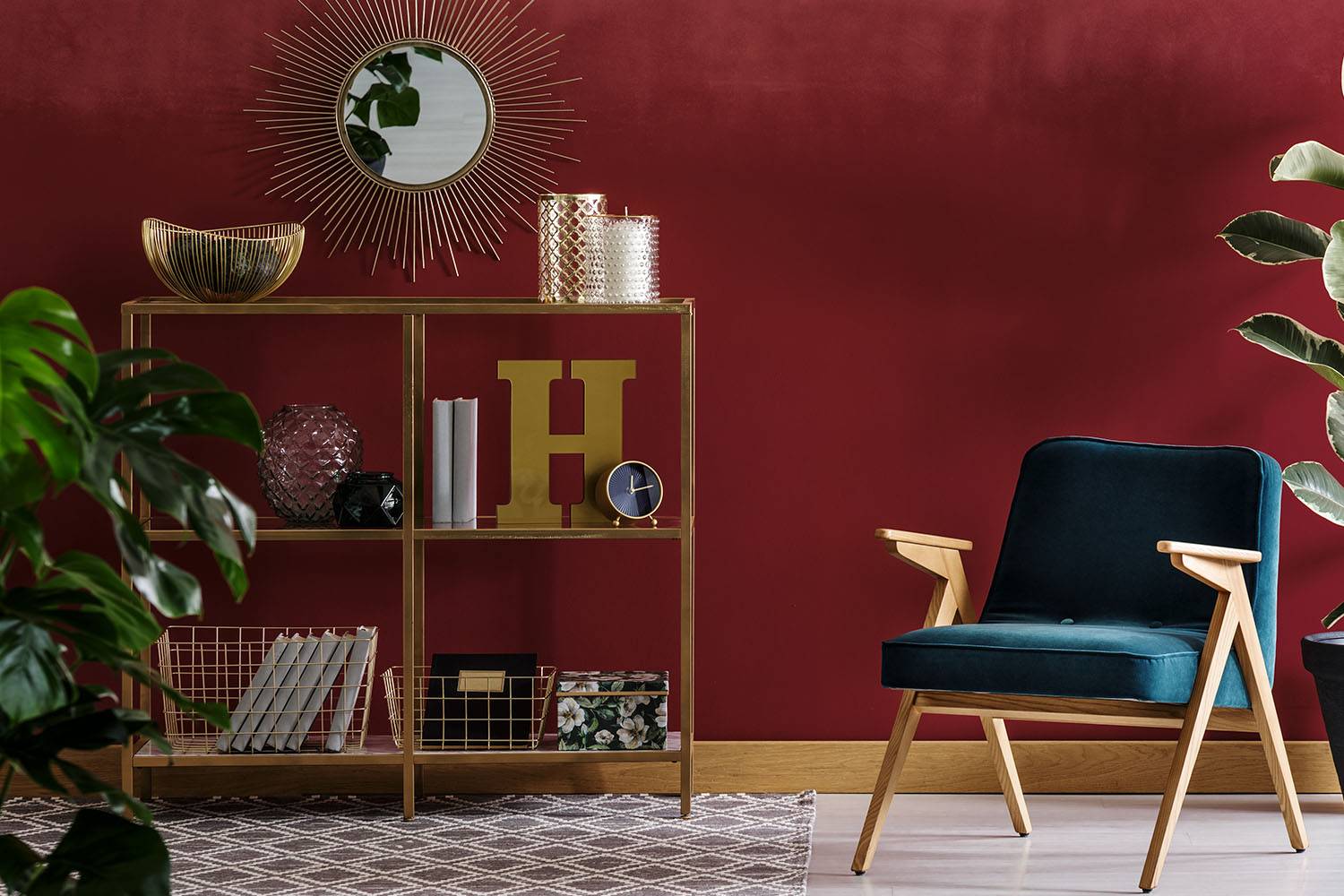
burgundy and navy designed modern living room with gold chair and sectional couch modern wall art
Photo Credit: LuxDeco

Shades of blue are generally viewed as calm, soothing colors. However, navy, a darker shade, is an authoritarian color that represents power and importance. It is also a highly professional color used frequently in uniforms or corporate offices, but in the home, it adds an element of luxury and elegance.

midcentury modern styled navy blue chair and shelf with gold accents and burgundy wall
Photo Credit: KatarzynaBialasiewicz / Getty Images

When combined with the strength and purpose burgundy denotes, you get an intense color combo with plenty of visual interest and contrast. Burgundy and navy can be a bold pairing when both colors are used in large quantities.

Avoid overpowering the eye by balancing the colors with a lighter neutral, like cream or white. Alternatively, you could use navy as a base color and accent with the brighter shade of burgundy.  

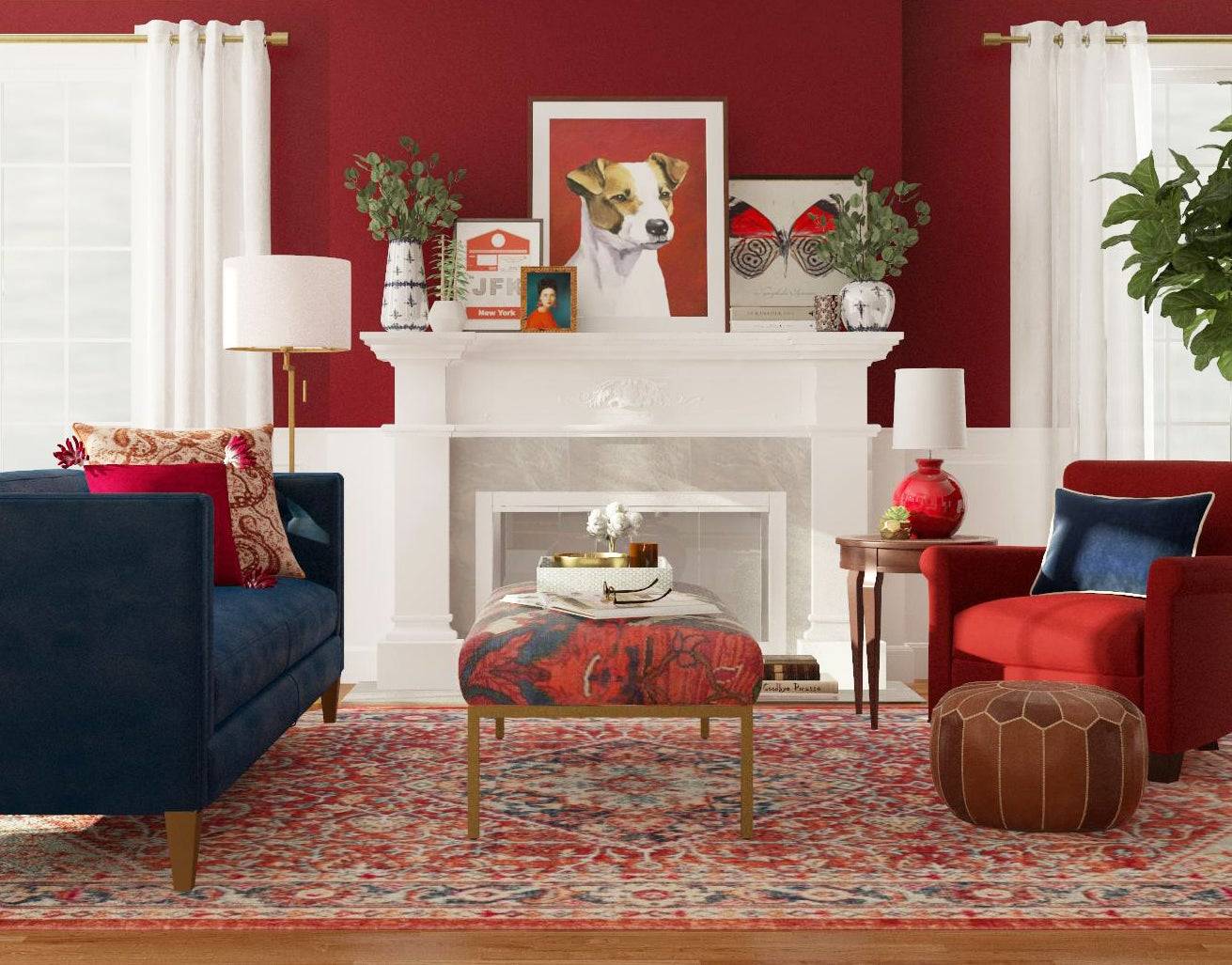
burgundy and navy living room with white fireplace
Photo Credit: Modsy

Burgundy and Black 

Burgundy and black is a potent color combination that packs a lot of drama. It is a reasonably classic combo used in fashion, art, and interior design for decades, thanks to its aesthetically delightful contrast. 

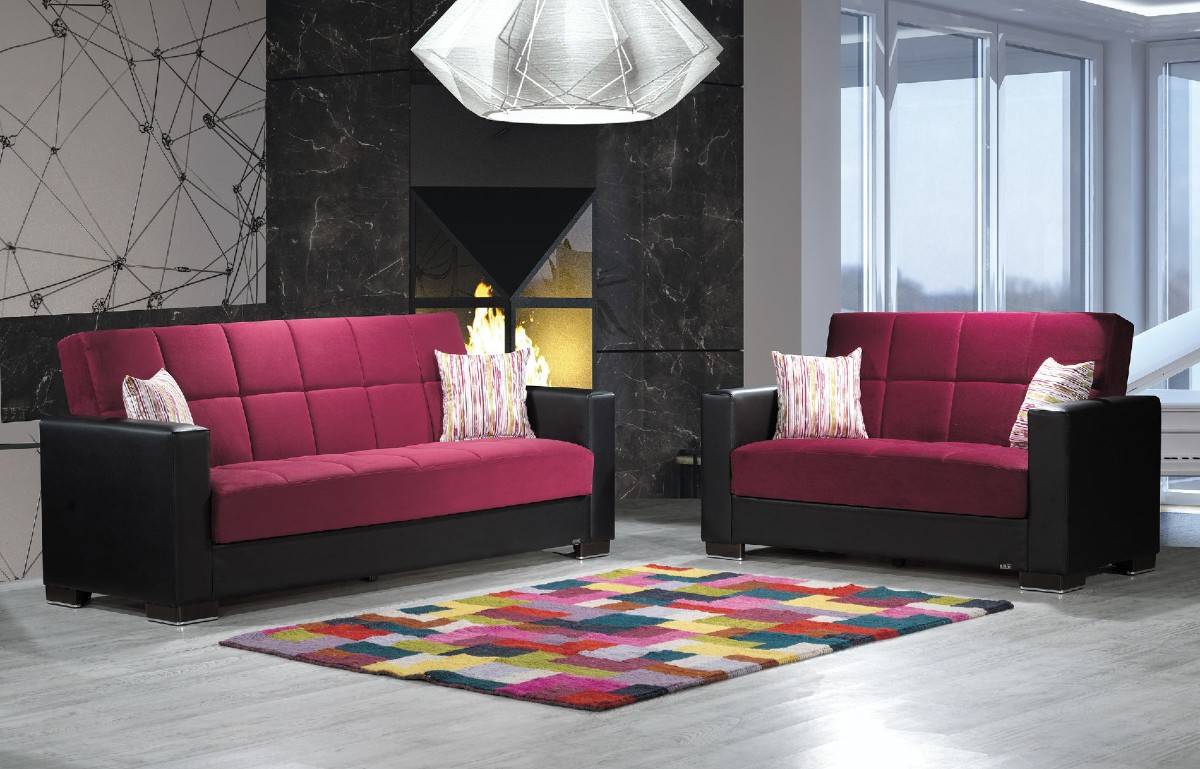
burgundy and black couches with area rug in the middle stone granite fireplace
Photo Credit: Comfy Co

Black is a rich color that signifies refinement and complexity. There are hundreds of shades of black as well. Some shades are more saturated than others, but all pair nicely with burgundy. Bringing these colors into your home or personal style is uncomplicated.

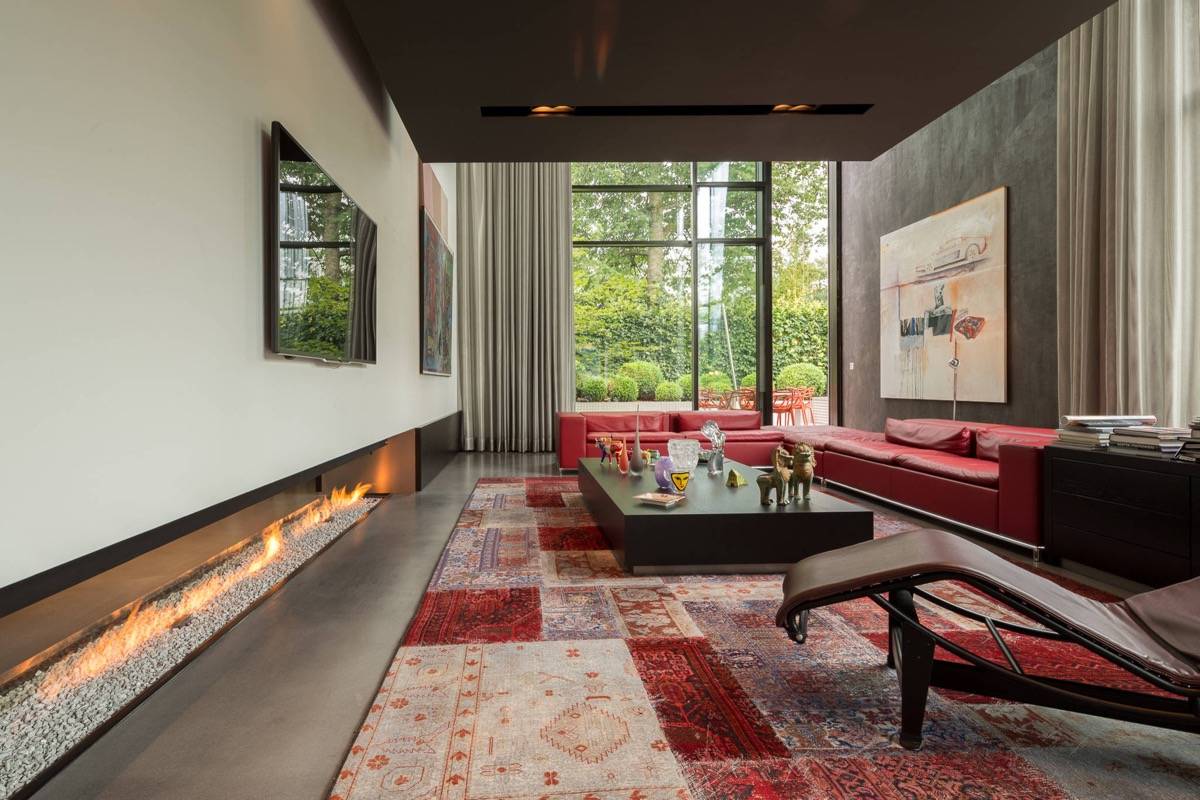
large modern living room with black and burgundy furniture low fireplace
Photo Credit: Gaellesure

This color scheme translates well to patterns. Don’t be afraid to have fun mixing pops of burgundy with patterned fabrics like black and white stripes or polka dots. 

Burgundy and Green

Although classic red and green are typically seen as Christmas colors, putting this color scheme into motion in your home won’t automatically scream “Merry Christmas.” The purplish tones of the burgundy deepen and soften the reddish tones.

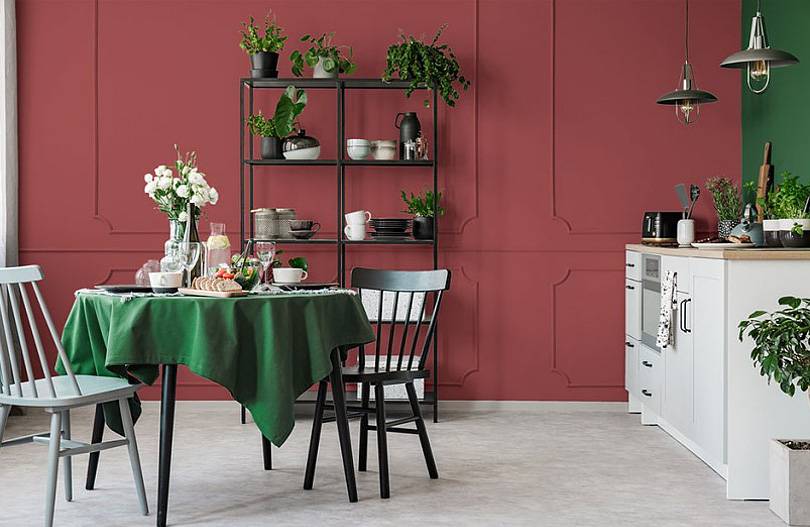
burgundy and green dining room with black chairs and open shelving
Photo Credit: Magnat

This color scheme looks especially lovely in extravagant fabrics like velvet or satin. Using them together in conjunction with lighter colors offers daring contrast while pairing them with darker shades like mustard and navy creates an exotic look.

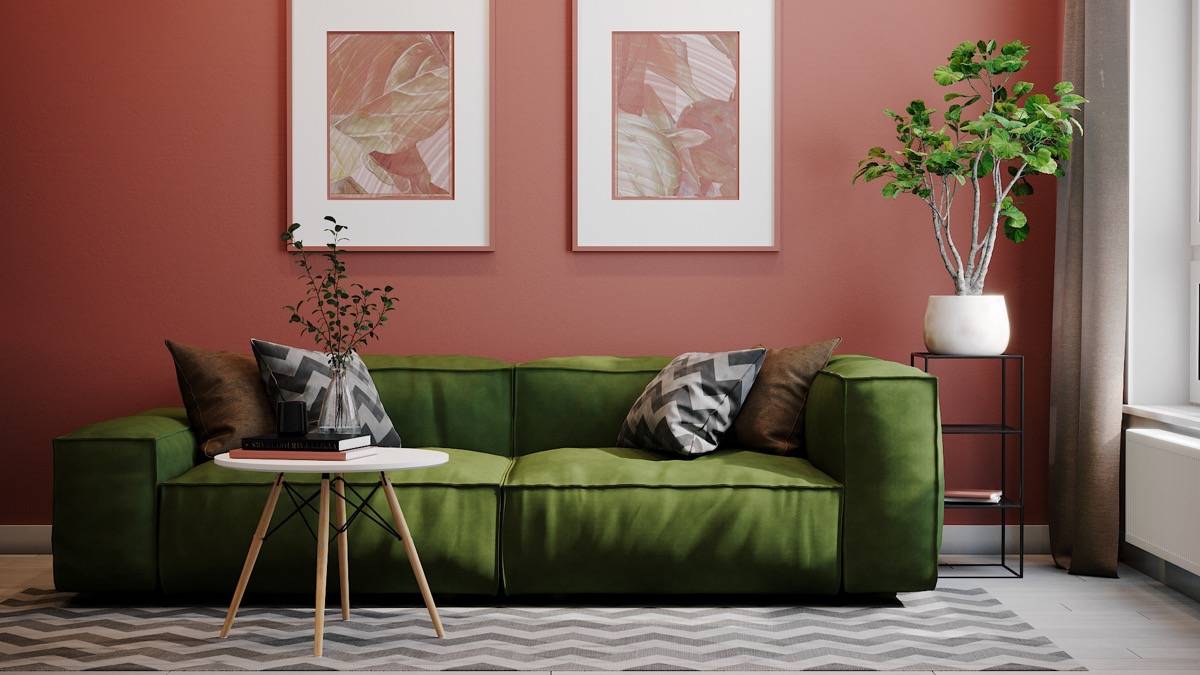
green couch in front of burgundy wall with wall art table and greenery
Photo Credit: Behance

Burgundy and Cream 

Burgundy is very rich, and because of this, you may want to pair it with a neutral color like cream to help offset some of its boldness. Cream is a calming color that is closer to yellow than it is to white.

burgundy soad with cream walls and leaning ladder shelf
Photo Credit: Furniture Cart

As a result, it has a warmth that pairs well with the warmth of burgundy. Overall, this color scheme is definitive without straying too far into the more traditional but uninspired burgundy and white color pairing. 

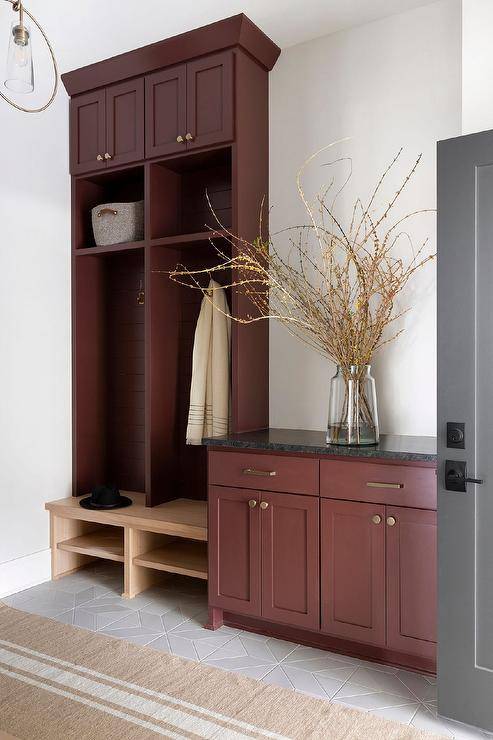
Burgundy red mudroom cabinets accented with aged brass hardware are topped with a black marble countertop and fixed beside burgundy red open lockers fitted with brass hooks mounted over a light stained wood bench. A french burlap runner covers gray feather style floor tiles.
Photo Credit: Bria Hammel Interiors

Cream and burgundy is a classic color combination that works well in various home decor styles. The neutral cream color can help to tone down the intensity of the burgundy, making it a good choice for rooms that get a lot of natural light. This color combo can also create a warm and inviting feeling in a space.

Burgundy and Brown 

For a more manly take on burgundy, try pairing it with shades of dark brown. This combination is rich and earthy, and brings to mind warm fall afternoons. There are many ways to achieve this color combo.

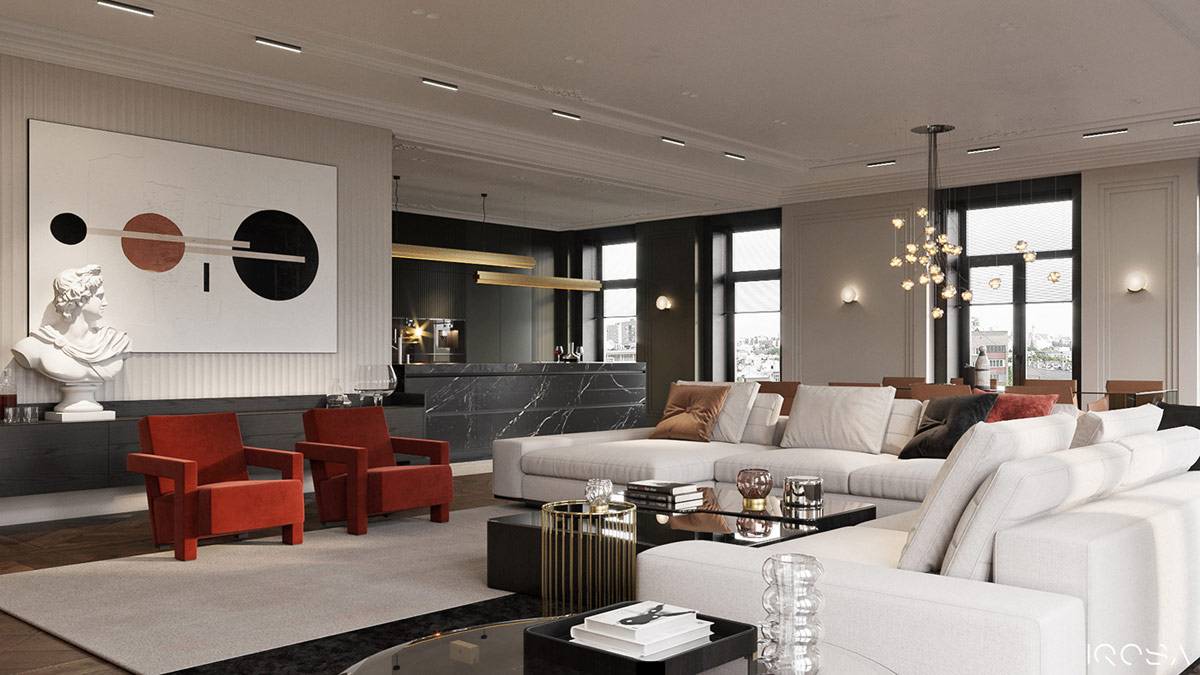
large expensive living room with white sectional couch large wall art burgundy arm chairs
Photo Credit: iqosa

For example, you could combine velvety burgundy drapes with rich chestnut leather furniture to make a warm and cozy study. Accenting dark brown furniture with burgundy pillows or accent chairs will also help the neutrals pop. 

Burgundy and Peach 

Peach is a shade somewhere in between cream and blush-pink that has undertones of orange in it as well. This pair may seem unusual, but the warmth and cheeriness of the peach pops against the depth of burgundy, making for a calming color combination that adds a little fun and depth to your home decor.

Burgundy and Charcoal Gray

Charcoal gray is presently a trendy color for home decor. It is a versatile dark shade of gray that, depending on its undertones, can look either warm or cool. Combining this neutral shade with a rich, deep burgundy can warm up a cool gray and give any room a moody atmosphere. This color scheme can be either masculine or feminine as well. 

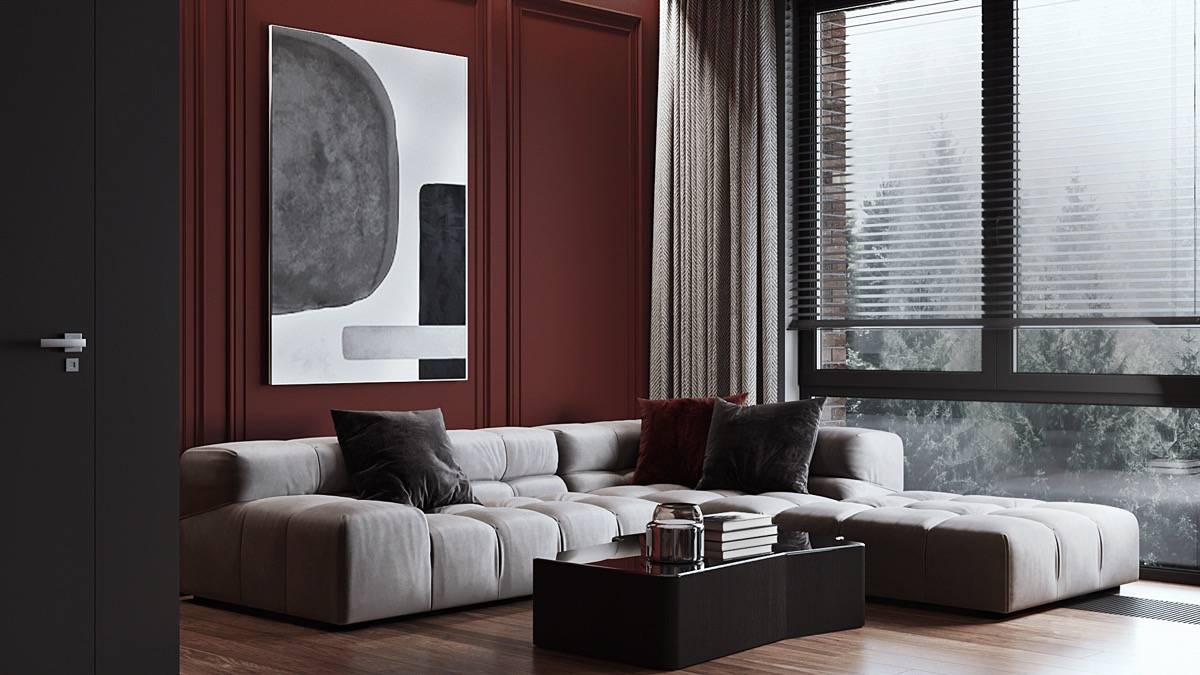
burgundy walls in charcoal grey living room sectional couch
Photo Credit: ivo.des

Burgundy and Teal

If you’re hoping for a joyful and innovative color scheme, try pairing a blue-green teal with burgundy. The two are complementary and will improve each other’s power and help one another pop.

burgundy and teal with pops of color living room with modern sectional couch and large wall art exposed brick
Photo Credit: Balbek

Teal, a deep variation of blue and green, completes the warm reds present in burgundy. While both are strong and bold, the pairing is a more feminine palette overall. 

Burgundy and teal also share some similar tones and shades, which helps to create a cohesive and stylish color scheme.

Burgundy and Mustard Yellow

Burgundy and mustard are another spectacular color combo. Although the pair might seem improbable to work together, they are a warm, vibrant duo that complements each other well. Both are earthy colors that add a touch of classiness and richness to any room in your home.

Burgundy and mustard yellow is a great color combination for those who want their home to have a unique, modern vibe. This color scheme can be used in any room of your house, but it looks especially significant in the kitchen or living room. To create this look, start with a burgundy base and then add accents of mustard yellow throughout the room. You can use this color scheme on walls, floors, furniture, and accessories.

burgundy wall with mustard yellow leather couch
Photo Credit: Behance

A valuable tip for making these two shades work together is to ensure they are the same shade. If that sounds confusing, aim to get both colors in the same level of brightness or darkness. 

large modern living room with modern couch and light fixture burgundy and mustard yellow
Photo Credit: dar_architects

Mustard yellow is a great color to use as an accent color because it is both eye-catching and unique. It also goes well with various other colors, making it easy to create a cohesive look in your home. When using mustard yellow as an accent color, pair it with a light or neutral-colored base. This will help to create a balanced look in the room.

Burgundy and Blush 

For a color scheme that is sleek, feminine, and elegant, you can’t go wrong with blending burgundy and blush. The softness of this shade of pink pops against the dark purplish-red hues in the burgundy. 

burgundy and blush living rooim with velvet couch dark and moody
Photo Credit: Behance

Burgundy and Gold 

Burgundy doesn’t just pair well with other standard colors. It also looks beautiful with metallics like gold. Pairing gold with burgundy results in a rich and lush combo that is timeless. 

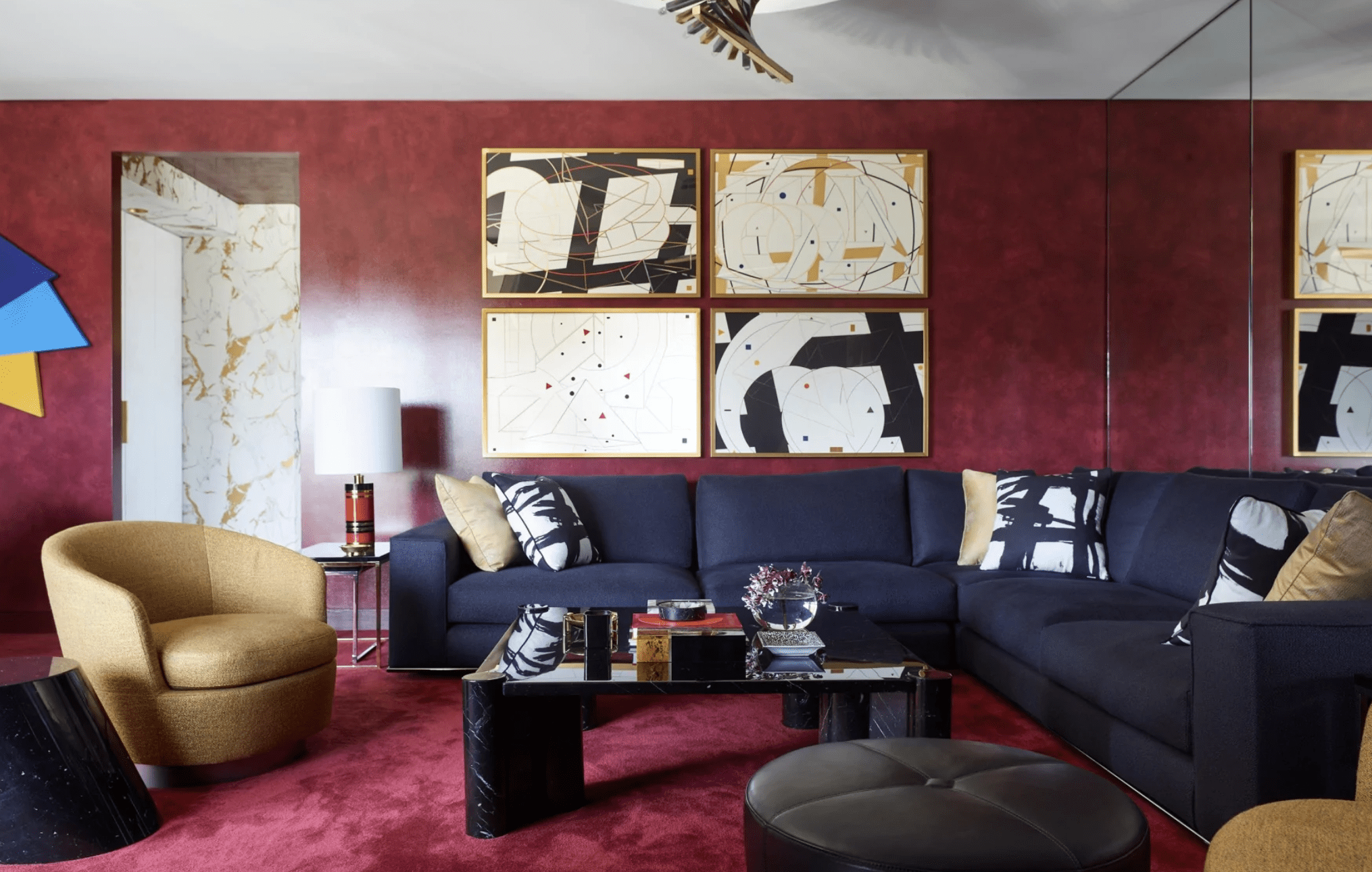
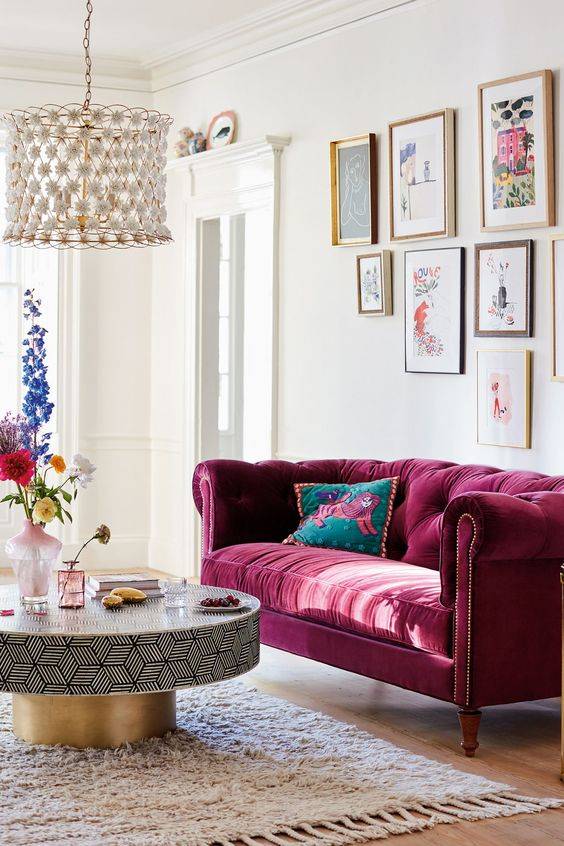
room with burgundy velvet couch gold frames and round coffee table with glass bead chandelier
Photo Credit: Anthropologie

The warmth these two colors ooze may overwhelm one another if you’re not cautious. Be sure to offset a burgundy and gold color scheme with dark woods and light, delicate colors like white or ivory for contrast. 

What Furniture to Choose if You Want to Use Burgundy

Furniture that looks good when combined with burgundy is not an obvious choice. A lot depends on the result you’re aiming at and on the burgundy color shades you pick.

Classic interiors benefit best from natural wooden furniture. They are perfect both for intense burgundy-colored walls and in case you use only burgundy decorations.

If you like bold combinations, consider upholstered furniture in a characteristic shade – emerald green or orange-yellow. Such a combination looks perfect in the living room – especially if the interior is enormous.

What Style is Best for the Color Burgundy?

Depending on the elements you choose and the hues you combine – you can achieve various interior styles with burgundy. The color can be perfectly accentuated with furniture and decorations.

The color burgundy is most often used in classic and elegant interiors. Glamour or Art Deco styles are other good options. You can also use this color in an industrial style. It might be more difficult – nonetheless, burgundy in such interiors has appeared quite often recently.

Best Ways to Use Burgundy in Your Home

  • Burgundy is an excellent choice for walls in rooms you want to be warm and comforted, such as a den or dining room.
  • Limit burgundy in bedrooms because although it is more reserved than brighter reds, it still carries lots of energy, which can be overstimulating for some people.
  • Burgundy accent pillows and throw blankets are a fun alternative to traditional gray or black. Use them in a neutral-colored space where you want to add a bit of color and warmth.

Burgundy is often found in oriental rugs, which can easily be incorporated into traditional and modern interiors.

Frequently Asked Questions (FAQs)

Is burgundy a good interior design color?

Absolutely! Burgundy looks wonderful on walls, on pieces of furniture, or as accents in home decor.

What colors accent burgundy?

Dozens of beautiful colors work with burgundy, including shades of blue, purple, yellow, and green.

Does burgundy go with gold?

Burgundy looks excellent with gold-colored fabrics or metals found in light fixtures or accessories.

What is a complementary color for burgundy?

Since burgundy is a shade of red, a complementary color would be green. This could include blue greens, like teal, or more traditional greens, like forest green.

Is maroon the same as burgundy?

No. Although both exist in the red family, maroon has brown undertones that give it a brick-red color, whereas burgundy is a combination of red, blue, and purple that gives it a more berry-colored tone.

Here are some more color combinations articles you may enjoy:

You're reading 11 Colors That Go with Burgundy—Add This Rich Color to Your Home, originally posted on Decoist. If you enjoyed this post, be sure to follow Decoist on Twitter, Facebook and Pinterest.


from decoist https://ift.tt/DHbYSvk